


Total Battle: Strategia Guerra
4,22.72K Recensioni
Dettagli dell'app
- Versione
- 349.6.133-release
- Aggiornato il
- Licenza
- Free
- Download
- 50.000.000+
- Sviluppatore
- Scorewarrior
- Categorie
- Strategia
- Piattaforma
- Android, iOS
Screenshot
 Analisi di AppCompare
In Total Battle, the appeal is less about winning one quick fight than about gradually turning a vulnerable settlement into a force that can compete online. I like that the game gives strategy fans two connected reasons to return: building an empire and taking part in war with other players. That combination can make a spare moment feel purposeful, though it also asks for more patience than a straightforward battle game.
Developed by Scorewarrior, this free strategy game has been available since 8 October 2018. It has a 4.2 average from around 356,000 ratings and more than 50 million installs, so it is a well-established choice rather than an obscure experiment. The PEGI 7 age rating makes it accessible to younger players, but the online competition and long-term progression are likely to matter more to adults deciding whether its pace suits them.
What to expect from the opening stretch
Before downloading, I would ask myself whether I want a game that gives me a finished match each time I open it, or one that makes a small decision part of a longer plan. Total Battle belongs firmly to the second kind. Its central promise is not a quick succession of isolated encounters, but the gradual work of developing a settlement and taking that growth into multiplayer warfare. That distinction is more useful than simply calling it a strategy game: it tells you what sort of attention the game is asking for.
For a newcomer, the best way to keep the opening from feeling like a list of chores is to connect every action to a personal aim. I might decide that a visit is about improving my foundations, for example, rather than trying to respond to every prompt or opportunity at once. This makes it easier to tell whether I am enjoying the planning or only tapping because something is available. If that deliberate rhythm sounds appealing, the early goals have a clear purpose; if you mainly want immediate action, the setup may feel like a detour.
That difference also helps answer a practical question: can I play casually? Yes, if casual means returning when it suits you and being content with gradual development. It is less suitable if casual means that every short visit must produce a self-contained win. I would not treat a few spare minutes as a commitment to complete the whole strategic loop. A small, sensible decision can be enough, and saving a larger choice for a time when I can think it through is often the better use of a session.
From a small foothold to meaningful goals
Per me, l’avvio di Total Battle funziona meglio se lo considero una presa di posizione, non una corsa a spuntare ogni obiettivo disponibile. In questa sezione guardo a come trasformare i primi accessi in piccoli passi con un senso, senza pretendere che ogni pausa si chiuda con una vittoria memorabile. La differenza si nota soprattutto quando scelgo in anticipo quale parte del mio impero voglio rendere più solida.
Why the opening works best in short sessions
At the beginning, I find the most useful way to approach Total Battle is to treat each visit as a small planning session. Instead of trying to do everything at once, I focus on the immediate objective in front of me, then decide what deserves attention next. The satisfying part is seeing a settlement begin to feel like the base of an actual campaign rather than a screen I visit without direction.
Da leggere prima di scegliere

Canva accelera la creatività senza decidere al posto tuo

Google Traduttore porta la lingua fuori dalla casella di testo

SHEIN sul telefono: come l’app trasforma la navigazione in acquisto

Google Drive sul telefono: meno attese, più lavoro in movimento

WhatsApp Messenger, la scelta della settimana per restare in contatto

Google Chrome, ritrovare pagine e riprendere la lettura senza attrito
That structure suits players who enjoy a clear sense of purpose. A quick check-in can be enough to make a decision about the empire’s development, while a longer session leaves room to engage more deeply with the war side. The game’s central loop is easy to understand in broad terms—build, strengthen, and compete—but the strategic pleasure comes from choosing what to prioritize rather than simply tapping through every available action.
One practical tip: before starting a session, pick one main goal. If I split my attention between every building decision and every competitive distraction, progress feels scattered. A focused visit gives me a clearer sense of whether I am strengthening my position or merely staying busy. That distinction matters in a game designed for gradual growth.
Progress you can judge without rushing
The most persuasive progress signal is not a single dramatic victory; it is the growing sense that my empire is better prepared for what comes next. I look for whether my choices are supporting a coherent plan: am I improving the foundations of my position, or investing attention in something that does not help the way I want to play? Thinking this way makes development feel like strategy rather than a checklist.
That also helps when playing around everyday routines. If I have only a few minutes while waiting for a train, I can make a limited decision and leave the larger commitment for later. On a quiet evening, I can spend more time considering how the building side supports online competition. The game is easier to enjoy when I do not expect every session to produce a major breakthrough.
For newcomers, this is a useful mindset because the sheer idea of building an empire can make it tempting to chase every visible opportunity. I recommend judging progress by whether your next step makes sense for your own plan, not by how quickly you appear to be advancing compared with other players. That keeps the early game engaging without turning it into a race you did not choose.
A routine that keeps choices manageable
A realistic way I would fit the game into an ordinary day is to check in briefly during a break, settle on one development priority, and stop there if I have no time to think about the broader competition. Later, when I can give it more attention, I can consider how that choice supports my longer-term approach. The useful trade-off is that a short visit can still feel purposeful, but it should not be mistaken for a complete session with a dramatic payoff.
I also find it sensible to keep a loose mental note of the goal I chose last time. That small habit can prevent me from changing direction every time I return and makes it easier to see whether my decisions are adding up. It is not a special feature or a complicated system; it is simply a way to make a persistent strategy game feel less scattered when play is split across several short visits.
Where the challenge and pacing become demanding
Quando la crescita incontra la guerra online, il ritmo può diventare più impegnativo di quanto sembri all’inizio. Qui mi concentro su come riconoscere il momento in cui la competizione aggiunge motivazione e quello in cui rischia invece di dettare il passo al posto mio. È una distinzione utile prima di decidere se la progressione di Total Battle si adatta davvero al tempo e al tipo di sfida che cerco.
Online war changes the value of preparation
The multiplayer element gives the strategy a different weight from a purely solo builder. When other players are part of the picture, development is not just about making a settlement look stronger; preparation has a competitive purpose. I enjoy that extra tension, because it gives the empire-building decisions a context beyond personal completion. It also means that someone who wants a calm, self-contained game may find the online emphasis less appealing.
Compared with a typical single-player strategy game, this one puts more of the long-term experience in the relationship between growth and competition. Compared with a quick tactical battler, it asks for more investment in the world around the fight. That trade-off is central: if you want each session to deliver a complete, neatly wrapped battle, a shorter match-based game may be a better fit. If you enjoy shaping a position over time, the broader loop has more to offer.
A useful habit is to decide whether a session is for development or for competition before diving in. Keeping those intentions separate makes it easier to notice what the game is asking of you and to avoid feeling that every visit must accomplish both. I find this especially helpful when I am playing casually; the game feels more welcoming when I set my own pace rather than treating online rivalry as an obligation.
The curve rewards patience, but can test it
The main difficulty is pacing. Empire-building naturally makes improvement feel gradual, and the multiplayer setting can make that gradual progress seem more urgent. If you are used to games that constantly hand out dramatic unlocks, Total Battle may feel restrained. Its appeal depends on enjoying the preparation as much as the payoff, and not every player will find that balance satisfying.
I would not recommend it to someone looking for a completely relaxed experience with no competitive pressure, or to a player who has little interest in returning to the same strategic world over time. The game is also a less obvious choice for anyone who wants deep tactical decisions in every brief session. Its broader focus is on building an empire and fighting online, not delivering a self-contained skirmish whenever you open it.
For players who do like gradual strategy, the challenge can be motivating rather than frustrating. My advice is to resist measuring success only by immediate strength. Think about whether your choices are making your position more coherent and whether you are learning how to balance growth with competition. That approach makes slower stretches feel like part of the plan, not proof that the game has stopped moving.
When the comparison points elsewhere
If I were choosing between this and a conventional turn-based strategy game, I would pick the latter when I wanted a contained challenge with a clear start and finish. If I wanted quick tactical battles that ask little of me between matches, I would look for a match-focused alternative instead. Total Battle is more appealing when I want the empire itself to be part of the experience and accept that its competitive context makes preparation matter.
This is a meaningful distinction for players who enjoy strategy but dislike feeling tied to a continuing world. The game’s online emphasis can make development feel consequential, yet that same connection is a poor fit if I want to pause a campaign indefinitely without thinking about other players. I would choose based on the kind of tension I enjoy: planning toward a larger position, or solving a fresh tactical puzzle that stands on its own.
Spending and staying in control
The game is free to start, with optional in-app purchases ranging from €0.99 to €249.99 when billed through Google Play. That is a wide span, so I would set a personal spending limit before playing if purchases are a concern. The important point for a strategy game with long-term progression is to decide in advance whether you are comfortable paying for optional extras, rather than letting competitive impatience make the decision for you.
I would also separate enjoyment from speed. If progress feels slow, first ask whether you still like planning and developing your empire. Paying to move faster would not fix a mismatch with the game’s core rhythm. For younger players, the PEGI 7 rating is useful context, but I would still recommend that families discuss optional spending and online play in ordinary, practical terms.
For technical context, the current Android release is version 348.2.111-release and requires Android 6.0 or later. Scorewarrior is the developer, and the game is categorized as strategy. Those details make it easy to check basic compatibility, while the more important question remains whether you want a persistent-feeling online war game rather than a quick standalone diversion.
Who is likely to enjoy the long game?
I would recommend it to someone who likes making a plan, returning to see how it is developing, and weighing personal progress against a multiplayer backdrop. It may also suit a player who has enjoyed empire-building games but wants competition to give those choices a wider purpose. The strongest match is not necessarily the person with long uninterrupted sessions; it is someone who can enjoy small decisions without demanding an immediate spectacle every time.
On the other hand, I would suggest skipping it if you want a story-led campaign with a definite ending, or if online rivalry makes a game feel like an obligation. It is also not my first choice for a player whose only available gaming time comes in tiny windows and who wants a complete tactical encounter in each one. Being clear about those preferences before starting can prevent the gradual structure from feeling like a surprise drawback.
A progression loop for the right kind of strategist
What keeps me interested is the connection between small decisions and a larger goal. Building an empire gives each visit a reason to exist, while online warfare supplies a competitive horizon. The strongest use case is for someone who enjoys checking in regularly, making deliberate choices, and watching a position develop rather than expecting constant spectacle. It can work well as a low-pressure companion to daily routines, provided you are comfortable with gradual momentum.
Its weaker side is the same feature viewed from another angle: long-term progression can feel like pressure if you compare yourself too closely with other players or expect quick, self-contained rewards. Players who prefer a campaign with a clear finish, or a tactical game that can be mastered in short bursts, should look elsewhere. Those who like the idea of building first and competing as part of a continuing strategy are more likely to find the trade worthwhile.
With a 4.2 average and a large audience, Total Battle has clearly found players who enjoy this blend of empire-building and multiplayer conflict. I would approach it with realistic expectations: choose a goal for each visit, take progress at your own pace, and keep optional purchases within a limit you set yourself. If that sounds like a satisfying rhythm, it is a solid free strategy game to try; if you want immediate battles without a longer commitment, another style of game will probably suit you better.
Pro
- Ampia varietà di unità
- ciascuna utile in situazioni diverse.
- La mappa condivisa rende esplorazione e conquista più dinamiche.
- Le alleanze favoriscono cooperazione e pianificazione con altri giocatori.
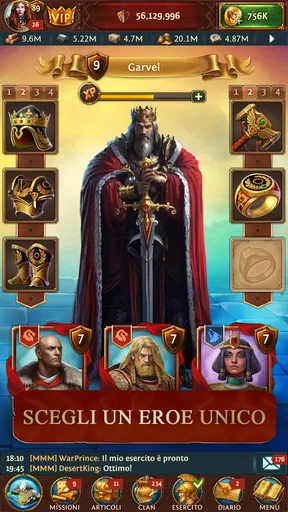
- Eroi e artefatti aggiungono opzioni per personalizzare le strategie.
- Sono disponibili attività e obiettivi oltre ai combattimenti.
Contro
- La costruzione e il potenziamento degli edifici possono richiedere attese lunghe.
- Gli scontri tra giocatori più avanzati possono risultare impegnativi per i nuovi arrivati.
- Per progredire rapidamente può essere necessario dedicare molto tempo al gioco.
- Le risorse possono diventare un limite quando si avviano più potenziamenti.
- Le notifiche e le attività ricorrenti possono spingere a controllare spesso il gioco.
Domande frequenti su Total Battle: Strategia Guerra
Che cos’è Total Battle: Strategia Guerra?
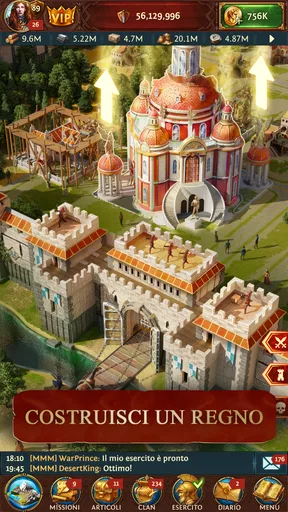
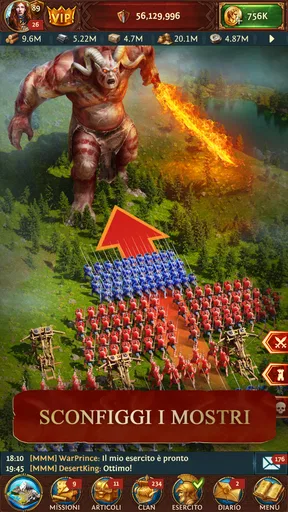
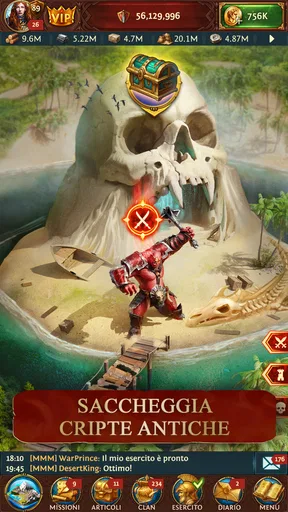
Total Battle: Strategia Guerra è un gioco di strategia e gestione ambientato in un mondo fantasy. La partita ruota attorno alla costruzione e al potenziamento della propria città, alla raccolta di risorse e all’addestramento di truppe. Si possono inoltre esplorare territori, affrontare nemici e collaborare o competere con altri giocatori. Il ritmo combina pianificazione a lungo termine e battaglie, quindi può essere adatto a chi ama far crescere un impero gradualmente.
Si può giocare a Total Battle da soli o serve una connessione Internet?
È possibile occuparsi in autonomia dello sviluppo della città e affrontare contenuti contro avversari controllati dal gioco, ma le funzioni sociali e competitive sono una parte importante dell’esperienza. Per interagire con altri giocatori, partecipare ad attività di alleanza e accedere alle funzionalità online è necessaria una connessione Internet. Prima di scaricarlo, conviene anche verificare i requisiti aggiornati del dispositivo e la disponibilità del gioco nel proprio Paese.
Total Battle: Strategia Guerra è gratuito?
Il gioco può essere scaricato e avviato senza acquistarlo, ma include acquisti in-app, che possono offrire risorse, pacchetti o altri vantaggi utili a progredire più rapidamente. In genere è possibile giocare senza spendere, mettendo in conto tempi di attesa e una crescita più graduale. Se il dispositivo è usato da minori, è consigliabile controllare le impostazioni di acquisto e richiedere l’autorizzazione prima di effettuare transazioni.
Come funzionano le alleanze e le battaglie in Total Battle?
Le alleanze permettono di entrare in contatto con altri giocatori, coordinare obiettivi e partecipare a contenuti condivisi. Prima di unirsi, può essere utile leggere le regole del gruppo e verificare quanto sia attivo, perché la collaborazione può incidere sul ritmo di gioco. Le battaglie richiedono di preparare le truppe e considerare le risorse disponibili: attaccare senza pianificare può comportare perdite e rendere più lenta la ricostruzione dell’esercito.
Total Battle: Strategia Guerra funziona bene su tutti i telefoni e tablet?
La compatibilità dipende dal sistema operativo, dalla versione installata e dalle caratteristiche del dispositivo; non è quindi possibile garantire prestazioni identiche su ogni modello. Prima del download, controlla la scheda ufficiale dell’app per i requisiti minimi e lo spazio necessario. Su dispositivi meno recenti, partite lunghe o schermate con molte animazioni potrebbero risultare meno fluide. È inoltre consigliabile usare una connessione stabile e mantenere il gioco aggiornato.


